Related Articles
- Harnessing Nostalgia: How Memory Mapping Can Inspire Innovative Urban Infrastructure Solutions
- Revealing the Invisible: How Urban Legends Influence Public Perception of Infrastructure Projects
- Whimsical Structures: How Playgrounds Can Inspire Innovative Approaches to Urban Infrastructure Development
- The Enigmatic Impact of Dark Fiber Networks on the Future of Digital Ecosystems and Their Capacity to Scale
- Beyond the Horizon: Exploring the Impact of Cultural Nuances on Global Digital Infrastructure Expansion
- Whispers of the Future: How AI-Driven Edge Computing Redefines Network Resilience and Flexibility
Exploring Neuromorphic Computing: A Surprising Frontier for Energy Efficiency in Tomorrow's Data Hubs
Exploring Neuromorphic Computing: A Surprising Frontier for Energy Efficiency in Tomorrow's Data Hubs
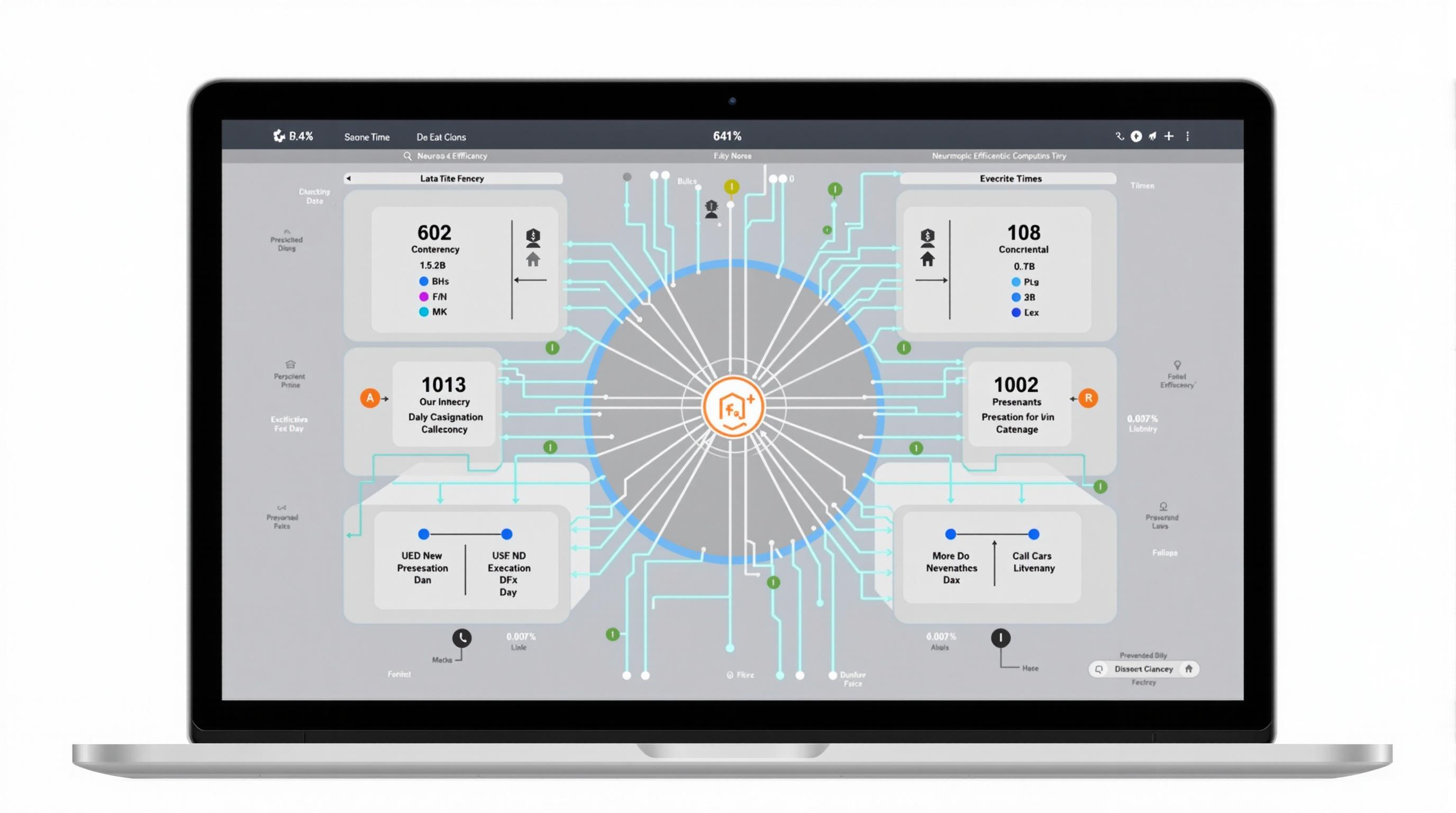
Neuromorphic computing, an innovative paradigm inspired by the human brain's architecture, offers groundbreaking solutions for energy efficiency in the realm of data hubs. This article delves into its principles, applications, and the transformative potential it holds for our digital future.
What is Neuromorphic Computing?
Neuromorphic computing mimics the neural structure and functioning of the brain to achieve superior processing capabilities and remarkable energy efficiency. While traditional computer systems rely on standard binary operations to process information, neuromorphic systems use an event-driven architecture that mirrors the way neurons communicate through spikes of activity.
The Energy Efficiency Dilemma
We're drowning in data, with the world generating approximately 2.5 quintillion bytes of data every day! (The World Economic Forum, 2021) Unfortunately, our existing computing frameworks are not equipped to manage this ever-growing data. They require enormous amounts of energy, leading to substantial operational costs and environmental concerns.
Data Centers: The Silent Power Hogs
Did you know that data centers consume around 2% of the global electricity supply? (International Energy Agency, 2020) These facilities are the beating hearts of the digital age, yet they operate like enormous black holes, sucking up energy with little regard for sustainability. Neuromorphic computing can drastically reduce this power consumption, providing a greener alternative for future data hubs.
A Peek into Neuromorphic Architecture
Neuromorphic chips, such as IBM's TrueNorth and Intel's Loihi, use a vast network of simple processing nodes that simulate processing in a manner similar to neurons firing. This design leads to massively parallel processing, enabling these chips to handle complex tasks with far less energy than traditional processors. For instance, whereas conventional chips might consume 1,000 watts to perform a complex calculation, neuromorphic chips can do the same for as little as 1 watt!
Real-World Applications: Case Studies of Change
Implementing neuromorphic computing could revolutionize industries ranging from healthcare to robotics. Consider the potential for smart medical devices capable of processing vast amounts of sensory data in real-time. Researchers at the University of Manchester have developed a neuromorphic chip that processes visual input in a manner comparable to human vision, all while consuming a fraction of the power required by standard hardware.
The Competitive Edge: Neuroscience Meets Computing
As businesses compete for more efficient solutions, leaders in technology are placing bets on neuromorphic computing. In a recent analysis, it was found that companies adopting neuromorphic architectures could see their operational costs drop by up to 30% while also reducing their carbon footprint. (Gartner Report, 2023) It's not just about being green; it's about staying competitive.
A Friendly Reminder: The Human Element
Picture this: you’re at a coffee shop, and your barista starts brewing your favorite blend using a coffee machine that runs on neuromorphic principles. Not only does the machine brew your coffee exactly to your liking, but it does so using 90% less energy than conventional machines. This isn’t a futuristic dream; it’s a glimpse into the possibilities neuromorphic computing can unlock across various sectors.
Challenges and Limitations
However, not all that glitters is gold. Neuromorphic computing, while promising, faces challenges such as programming complexity and the need for specialized algorithms. Software developers and engineers must adapt their skills to exploit these new architectures fully, which may create initial hurdles for widespread adoption.
The Road Ahead: A Call to Arms
As a community of innovators and tech enthusiasts, we need to embrace neuromorphic computing as a viable path toward sustainability in tech. Governments, educational institutions, and private sectors should collaborate in funding research and development. The future is ours to shape, and the time to act is now!
Conclusion: Embrace the Future
In conclusion, neuromorphic computing stands at the intersection of technology and sustainability, offering a glimpse into a data-efficient future. By drawing inspiration from the neural mechanisms that power our brains, we have the potential to revolutionize how we process data, significantly reduce our carbon footprint, and ultimately create smarter, more efficient systems. The question is: Are you ready to join the movement?
Fun Fact
Did you know that the human brain can perform around 1 exaflop of calculations per second? Imagine harnessing that kind of power with energy efficiency that could redefine computing as we know it!
Taking it a Step Further
As we contemplate the implications of neuromorphic computing, it’s essential to remain informed and engaged. Attend workshops, participate in discussions online, and most importantly, keep an open mind. After all, who knows? The next breakthrough could come from the ideas of curious minds like yours!
Read More