Related Articles
- Harnessing Nostalgia: How Memory Mapping Can Inspire Innovative Urban Infrastructure Solutions
- Revealing the Invisible: How Urban Legends Influence Public Perception of Infrastructure Projects
- Whimsical Structures: How Playgrounds Can Inspire Innovative Approaches to Urban Infrastructure Development
- The Enigmatic Impact of Dark Fiber Networks on the Future of Digital Ecosystems and Their Capacity to Scale
- Beyond the Horizon: Exploring the Impact of Cultural Nuances on Global Digital Infrastructure Expansion
- Whispers of the Future: How AI-Driven Edge Computing Redefines Network Resilience and Flexibility
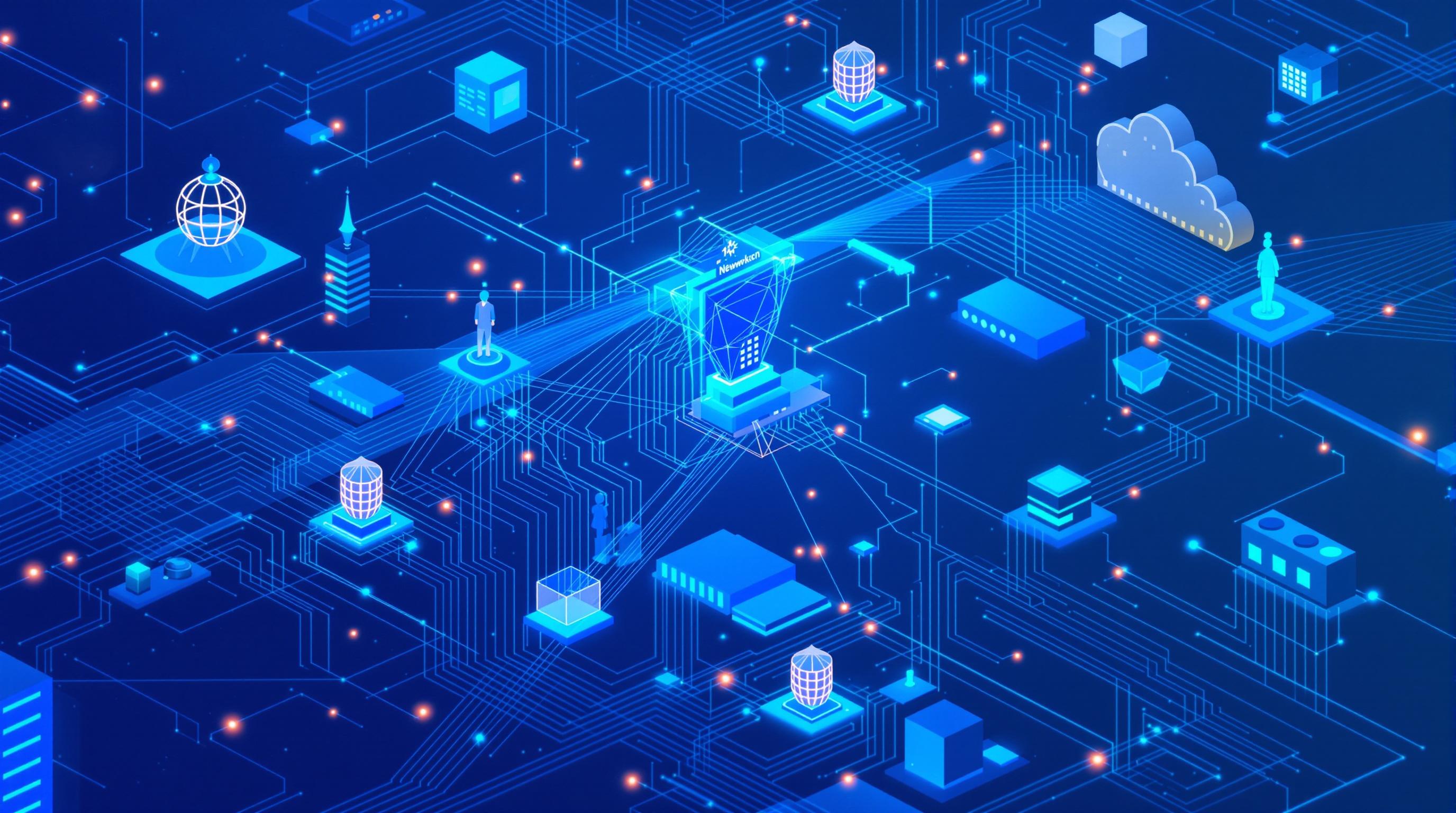
10 Intriguing Concepts That Redefine Our Understanding of Enhanced Connectivity in Network Architecture Essentials
10 Intriguing Concepts That Redefine Our Understanding of Enhanced Connectivity in Network Architecture Essentials
10 Intriguing Concepts That Redefine Our Understanding of Enhanced Connectivity in Network Architecture Essentials
1. Edge Computing and Decentralization
Edge computing is transforming how data is processed and stored by bringing computation closer to the data source. This reduces latency and improves the performance of applications, especially in IoT environments where real-time processing is crucial. By decentralizing data handling, edge computing minimizes the burden on central servers and optimizes bandwidth usage.
The rise of edge devices allows for a more responsive and robust network architecture. In scenarios where immediate data processing is required, such as autonomous vehicles or industrial automation, edge computing ensures low-latency responses. Organizations that adopt edge computing can achieve greater agility and adaptability in their operations.
Furthermore, the shift towards decentralization fosters a more resilient network, as it diminishes single points of failure. This leads to better redundancy and fault tolerance in the system, thus redefining our understanding of network dependability and efficiency (Mell & Grance, 2011).
2. 5G and Network Slicing
The advent of 5G technology revolutionizes connectivity through its capability of network slicing. This concept allows multiple virtual networks to be created on a single physical infrastructure, each tailored to specific service requirements. Industries ranging from healthcare to smart cities can benefit from customized slices that prioritize speed, reliability, and bandwidth allocation.
Through network slicing, service providers can optimize their resources to meet the needs of different applications. For instance, a slice for autonomous driving would prioritize low-latency communication, while a slice for video streaming might focus on higher bandwidth. This granularity in network management enhances user experience across various services.
As 5G continues to expand, it introduces a more flexible approach to connectivity, allowing multiple services to run simultaneously without conflict. This innovation not only maximizes infrastructure efficiency but also encourages the development of new applications and services (Zhang et al., 2018).
3. Software-Defined Networking (SDN)
Software-defined networking (SDN) is reshaping the way networks are managed and orchestrated. By decoupling the network control layer from the data forwarding layer, SDN provides greater flexibility in network management. Operators can easily program and adjust network traffic flows, leading to more efficient and adaptable infrastructure.
SDN enhances connectivity by enabling centralized control over distributed networks. This allows for real-time adjustments to network conditions, improving responsiveness to traffic fluctuations and security threats. The dynamic nature of SDN facilitates faster identification and mitigation of issues that could disrupt connectivity.
Moreover, SDN supports innovation by enabling quick deployment of new applications and services. Companies can experiment with different configurations on the fly, stimulating growth and adaptation in a rapidly changing digital landscape (Mira, 2019).
4. Artificial Intelligence in Network Management
The integration of artificial intelligence (AI) into network management enhances connectivity through predictive analytics and automated decision-making. AI algorithms can analyze vast amounts of data produced in networks to identify patterns, optimize performance, and anticipate issues before they arise.
AI-driven network management tools allow for proactive maintenance and troubleshooting. This reduces downtime and enhances overall reliability, promoting seamless user experiences across different platforms. By automating routine tasks, network engineers can focus on strategic initiatives rather than mundane operational tasks.
As AI continues to evolve, its role in enhancing connectivity will likely expand, empowering networks to be more self-sufficient and intelligent. This transformational shift not only redefines network operations but also supports the development of smarter, more connected environments (Chalabi, 2020).
5. Integration of Blockchain Technology
Blockchain technology is emerging as a key player in enhancing network connectivity. Its decentralized ledger system can provide secure, transparent, and tamper-proof communication among devices in a network. This is especially advantageous for industries where data integrity and security are paramount, such as finance and supply chain management.
The integration of blockchain enhances trust among network participants by enabling secure transactions without the need for a central authority. This decentralization reduces the risk of fraud and increases the resilience of the network against attacks. Furthermore, the immutability of blockchain records ensures that all transactions are verifiable and traceable.
As organizations explore the potential of blockchain for decentralized applications, we can expect a transformation in the way connectivity is approached, with an emphasis on security and trust. This innovative combination of technologies can pave the way for new business models and collaborative ecosystems (Cocco et al., 2021).
6. Quantum Networking
Quantum networking represents the frontier of connectivity, leveraging principles of quantum mechanics to enable ultra-secure communication. Quantum entanglement allows for instantaneous data transfer between nodes, irrespective of distance, which fundamentally changes our understanding of data transmission and security protocols.
This next-generation technology has applications in secure communications, where the quantum key distribution protocols provide unbreakable encryption. As cybersecurity becomes a pressing concern, quantum networking offers promising solutions to safeguard sensitive data against evolving threats.
The potential of quantum networking also lies in its ability to create fundamentally new architectures that do not rely on classical communication means. This could revolutionize everything from telecommunication to data centers, enabling more efficient and secure virtual environments (Gisin et al., 2002).
7. Multi-Access Edge Computing (MEC)
Multi-access edge computing (MEC) extends the cloud computing paradigm to the edge of the network, enhancing the ability to process data closer to the user. This architecture optimizes service delivery and minimizes latency, allowing for more responsive applications in telecommunications, entertainment, and other sectors.
MEC enables richer and more interactive experiences by leveraging localized data and resource management. For example, augmented reality and real-time gaming applications can thrive in a MEC environment, where they can benefit from reduced lag and increased data throughput.
Furthermore, by incorporating MEC into network designs, service providers can efficiently manage resource allocation and traffic, thus enhancing overall connectivity and improving service quality for users (Hossain et al., 2018).
8. Network Function Virtualization (NFV)
Network function virtualization (NFV) allows for the virtualization of network services that traditionally run on proprietary hardware. This development brings flexibility and scalability to network architectures, enabling rapid deployment and modification of services in response to user demand.
By leveraging NFV, organizations can reduce costs associated with hardware maintenance and upgrade cycles. This enhances connectivity by encouraging the use of innovative, software-based services that can be provisioned quickly and efficiently across various network environments.
As NFV continues to gain traction, it empowers companies to create more agile and adaptive networks. This flexibility is crucial in an era where user expectations and technological landscapes are evolving at a breakneck pace (Wang et al., 2016).
9. Cross-Reality (XR) Connectivity
Cross-reality (XR) refers to an amalgamation of augmented reality (AR), virtual reality (VR), and mixed reality (MR). This technology is reshaping how we think about connectivity by offering immersive digital experiences that blend the physical and virtual worlds. The demand for high-bandwidth connectivity is driven by XR applications, which require seamless interactions to function effectively.
With XR, connectivity extends beyond traditional communication to create shared environments and experiences. This paradigm shift allows for more engaging interactions within various sectors, including entertainment, education, and remote teamwork. The concept of presence becomes enhanced through XR, further emphasizing the importance of connectivity in creating meaningful experiences.
As XR technologies evolve, they will push the boundaries of what is possible in terms of digital interaction, demanding new standards and infrastructures that prioritize connectivity (Billinghurst et al., 2015).
10. Resilient Network Architectures
The concept of resilient network architectures is increasingly paramount in a world that demands uninterrupted connectivity. Resilience refers to the ability of a network to withstand and recover from disruptions, whether due to cyberattacks, natural disasters, or infrastructural challenges. Creating resilient systems enables organizations to maintain business continuity under adverse conditions.
Designing for resilience includes diversified routing paths, redundancy, and self-healing mechanisms that allow networks to adapt and reconfigure themselves in real-time. This enhances overall connectivity by ensuring seamless service delivery, even during failures or unforeseen circumstances.
As connectivity becomes ever more critical to global society, the emphasis on resilience in network architectures will redefine how we approach connectivity in our increasingly interdependent world. Resilient networks enable innovation and growth while minimizing risks associated with connectivity failures (Hollnagel et al., 2006).
References:
Mell, P., & Grance, T. (2011). The NIST Definition of Cloud Computing.
Zhang, J. et al. (2018). Network Slicing for 5G: A Survey.
Mira, M. (2019). Software-Defined Networking: A Comprehensive Overview.
Chalabi, A. (2020). The Role of Artificial Intelligence in Network Management.
Cocco, L. et al. (2021). Blockchain and its Role in IoT Security.
Gisin, N. et al. (2002). Quantum Cryptography. Reviews of Modern Physics.
Hossain, M. et al. (2018). Multi-Access Edge Computing (MEC): A Survey.
Wang, H. et al. (2016). Network Functions Virtualization: A Survey.
Billinghurst, M. et al. (2015). Augmented Reality and Virtual Reality: Empowering Human, Place and Business.
Hollnagel, E. et al. (2006). Resilience Engineering: Concepts and Precepts.
Read More